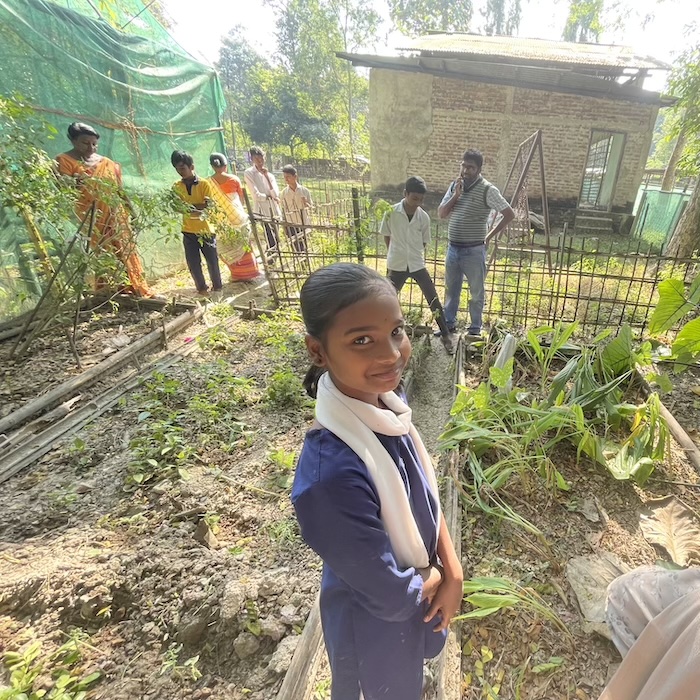
School Gardens as Living Classrooms
For many children, food appears on the plate with little understanding of the journey it has taken to get there. School gardens offer an opportunity to change this. By transforming a small patch of land into a space for exploration and discovery, schools can help children develop a deeper understanding of food, health, and the environment.
At Nourishing Schools Foundation, we see school gardens as living classrooms. They provide children with hands-on experiences that bring learning to life in ways that textbooks alone cannot.
In a school garden, students prepare the soil, sow seeds, water plants, remove weeds, and observe how crops grow over time. Through these activities, children learn important scientific concepts such as plant life cycles, soil health, biodiversity, and the influence of seasons and weather on agriculture. Lessons that may seem abstract in a classroom become tangible when children can see, touch, and nurture plants themselves.
School gardens also create opportunities to strengthen nutrition education. As children grow fruits and vegetables, they become more familiar with different foods and begin to understand the importance of dietary diversity. In our experience, children who participate in school gardening activities are often more willing to try and consume fruits and vegetables. This is particularly important at a time when many children are consuming increasingly processed diets.
The Ministry of Education has recognised the value of this approach through its promotion of nutri-kitchen gardens in schools. These gardens can supplement school meals while creating meaningful learning opportunities around nutrition, agriculture, and sustainability.
Beyond nutrition and science, school gardens help children develop a wide range of life skills. Working in a garden encourages teamwork, responsibility, patience, and problem-solving. Children learn that plants require regular care and that outcomes are shaped by consistent effort. They also gain an appreciation for the hard work involved in food production and develop greater respect for farmers and natural resources.
School gardens can strengthen connections between schools and communities as well. Parents, teachers, and local farmers often contribute knowledge, seeds, and support, making the garden a shared community resource. In many schools where Nourishing Schools Foundation has worked, student-led gardens have continued even after our programme cycle concluded, demonstrating the lasting value that schools and communities place on these spaces.
Ultimately, school gardens are about much more than growing vegetables. They help children understand the links between food, health, climate, and their everyday choices. These are lessons that remain with children long after the harvest is complete.
Photo credit: Nourishing Schools Foundation
COMMENTS