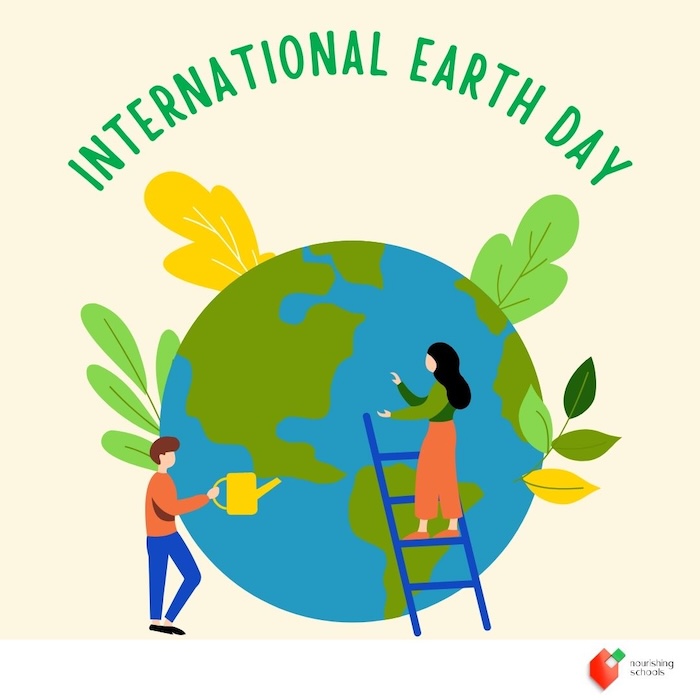
International Earth Day: Connecting Food, Health, and the Environment
Every year on April 22, International Earth Day reminds us that caring for the planet is a shared responsibility. The choices we make every day, from the food we eat to how we grow it, have important implications for both human and environmental health.
At the Nourishing Schools Foundation, we believe that helping children understand these connections is essential for building a healthier and more sustainable future. Through our programmes, children learn that food does not simply appear on market shelves or school plates. Food is part of a larger system that links soil, water, climate, biodiversity, agriculture, and human health.
One of the ways we bring these concepts to life is through school gardens. These gardens serve as living classrooms where children can learn by doing. Students prepare the soil, plant seeds, water crops, and observe how plants change over time. Along the way, they begin to understand how seasons influence what can be grown and why local growing conditions matter.
School gardens also help children appreciate the resources required to produce food. They learn about composting, water conservation, biodiversity, and the importance of protecting soil health. These experiences encourage children to think more carefully about food waste, sustainable consumption, and their own relationship with the environment.
This learning extends beyond the school boundary. In many of the communities where we work, climate variability is already affecting agriculture and livelihoods. Irregular rainfall, changing weather patterns, and declining soil health can make it increasingly difficult for families to grow nutritious food.
To address these challenges, Nourishing Schools Foundation also works with communities surrounding our schools to promote climate-resilient agriculture. Through demonstrations, training, and community engagement activities, families are introduced to practices that strengthen agricultural resilience and support better nutrition. These may include crop diversification, improved soil management practices, and the cultivation of nutrient-rich crops suited to local conditions.
By engaging both children and communities, we create opportunities for shared learning. Children often bring lessons from school gardens back to their homes, while parents and caregivers contribute local knowledge and agricultural experience. This exchange strengthens community ownership and increases the likelihood that positive practices will continue over time.
International Earth Day reminds us that environmental sustainability, nutrition, and health are deeply interconnected. Building sustainable food systems requires informed choices, practical skills, and collective action.
When children understand where food comes from and communities are equipped to adapt to changing environmental conditions, small actions can lead to lasting change. By investing in environmental education today, we can help create healthier people, more resilient communities, and a more sustainable planet for future generations.
COMMENTS